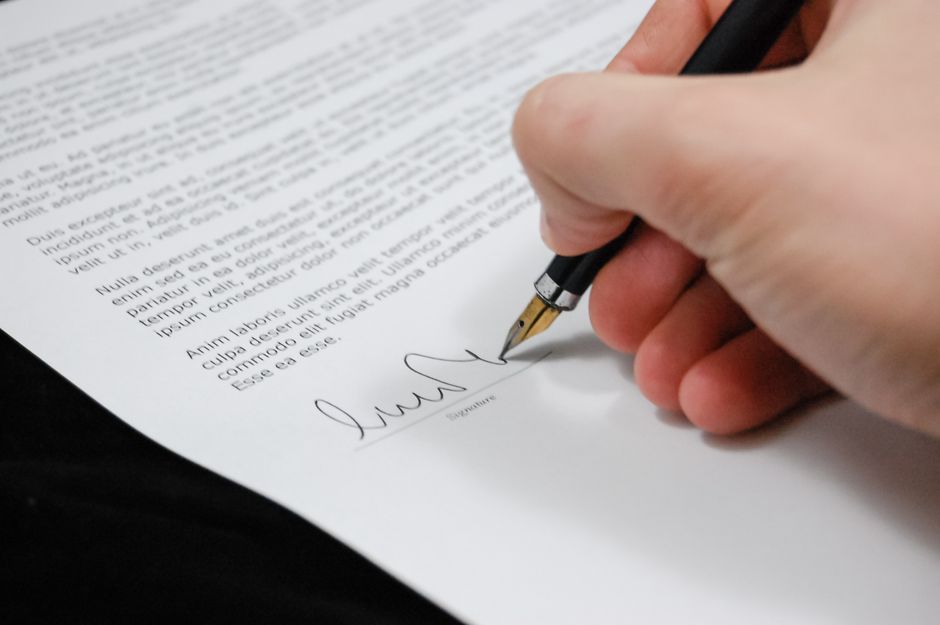
Power of attorney form — it sounds formal, but it is really just a written document that lets you pick someone you trust to handle things on your behalf. Maybe you are heading into surgery. Maybe your parent is getting older and needs help with bills. Or maybe you just want a safety net in place before anything happens.
A power of attorney form puts your wishes in writing so the right person can step in when you cannot. Without one, your family may need to go to court to get that same authority — and that process is expensive and slow.
When and Why You Need a Power of Attorney Form
Life does not always give you a warning before things change. A car accident, a stroke, or even a long vacation can leave important decisions in limbo. A power of attorney form lets you choose who handles those decisions — instead of leaving it to a judge. For example, if you become unable to pay bills or sign contracts, your agent can step in immediately.
There are several types. A general power of attorney covers broad financial authority. A limited one restricts the agent to a specific task, like selling one property. A durable power of attorney form stays in effect even if you become incapacitated — this is the type most families need. A springing one only kicks in when a doctor confirms you cannot make decisions. However, not every state recognizes springing powers, so check your state’s law first.
Many people assume they only need a power of attorney form when they are elderly. That is not true. Adults of any age benefit from having one. If you are 25 and get seriously injured, your parents cannot legally access your bank account without one. Setting this up now is a gift to the people who love you.
What to Include in a Power of Attorney Form
Every valid power of attorney form needs certain pieces. You must clearly identify yourself as the principal. You must name your agent (also called an “attorney-in-fact”). You must describe what powers you are granting — all financial matters, only real estate, only healthcare decisions, etc. You should also state whether the document is durable, meaning it survives your incapacity.
In most cases, you will also need to sign the document in front of witnesses and a notary public. However, the exact rules differ by state. Some states require two witnesses, others require one, and a few have no witness requirement at all. The table below shows how requirements vary in five large states.
| State | Witnesses Required | Notarization | Statutory Form Available | Key Statute |
|---|---|---|---|---|
| California | 2 (for healthcare POA) | Required (financial POA) | Yes | Probate Code §4401 |
| Florida | 2 | Required | Yes | Fla. Stat. §709.2105 |
| New York | 2 | Required | Yes (short form) | Gen. Oblig. Law §5-1513 |
| Texas | 0 (not required) | Required | Yes | Estates Code §752.051 |
| Illinois | 1 | Required | Yes | 755 ILCS 45/3-3 |
As a result, you should always check your state’s probate code or court self-help website before signing. Using the wrong number of witnesses can make the entire document invalid.
Sample Power of Attorney Form Template You Can Adapt
Below is a general durable power of attorney form template. Adapt it to your state’s requirements and your specific situation. Many states also offer their own statutory form, which banks and institutions may accept more readily.
Sample template — adapt to your state and your situation. This is an informational sample, not legal advice.
DURABLE GENERAL POWER OF ATTORNEY
I, [Your Full Legal Name], of [Your Full Address, City, County, State], born on [Date of Birth], hereby appoint:
[Agent’s Full Legal Name], of [Agent’s Full Address, City, County, State], as my attorney-in-fact (“Agent”).
Successor Agent: If my Agent is unable or unwilling to serve, I appoint [Successor Agent’s Full Legal Name], of [Successor Agent’s Full Address], as my successor Agent.
GRANT OF AUTHORITY
I grant my Agent full power and authority to act on my behalf in the following matters: [Check or list all that apply]
- Real property transactions
- Banking and financial transactions
- Business operations
- Insurance and annuity transactions
- Government benefits (Social Security, Medicare, Medicaid)
- Tax matters (filing returns, communicating with the IRS)
- Personal and family maintenance
- All other lawful financial matters
DURABILITY
This power of attorney shall not be affected by my subsequent disability or incapacity, pursuant to [your state statute, e.g., Fla. Stat. §709.2104 or N.Y. Gen. Oblig. Law §5-1501A].
EFFECTIVE DATE
This power of attorney is effective immediately upon execution. [OR: This power of attorney shall become effective only upon a written determination by my physician that I am unable to manage my own affairs.]
SIGNATURE
Signed this [Day] day of [Month], [Year].
____________________________
[Your Full Legal Name], Principal
WITNESSES
📨 Get Free Estate Planning Guides Alerts
Free · No spam · Unsubscribe anytime
Witness 1: ____________________________
Name: [Print Name]
Address: [Full Address]
Witness 2: ____________________________
Name: [Print Name]
Address: [Full Address]
NOTARY ACKNOWLEDGMENT
State of [State]
County of [County]
On [Date], before me, [Notary Name], personally appeared [Your Full Legal Name], proved to me on the basis of satisfactory evidence to be the person whose name is subscribed to this instrument, and acknowledged that they executed the same voluntarily.
____________________________
Notary Public
My Commission Expires: [Date]
AGENT ACCEPTANCE
I, [Agent’s Full Legal Name], accept this appointment as Agent and agree to act in the Principal’s best interest.
____________________________
[Agent’s Full Legal Name], Agent
Date: [Date]
How to Make It Valid in Your State
Filling out the power of attorney form is only half the job. You must also sign it correctly. In most states, that means signing in front of a notary public and one or two witnesses. Typically, witnesses cannot be the person you are naming as your agent. In New York, for example, witnesses also cannot be anyone who would receive gifts under the document.
Once signed, make several copies. Give one to your agent, one to your bank, and keep the original in a safe place — not a locked safe deposit box your agent cannot open. If the power of attorney form covers real estate transactions, you may need to record it with the county recorder’s office. In most cases, though, you simply store it and share it with institutions that need to see it.
If you are unsure about your state’s requirements, your state court’s self-help website typically has free instructions and sometimes a statutory form you can download. For complex situations — like blended families, business interests, or real estate in multiple states — contact a licensed attorney.
Frequently Asked Questions
Can I write a power of attorney form myself, or do I need a lawyer?
In most states, you can create a power of attorney form yourself. Many states provide a free statutory form. However, if your situation involves significant assets, property in multiple states, or family disputes, working with a licensed attorney can help you avoid costly mistakes.
Does a power of attorney form expire?
A durable power of attorney form does not expire while you are alive, unless you revoke it or set a specific end date. It does end automatically when you pass away. At that point, your executor or personal representative takes over under the terms of your will or your state’s probate process.
Can my bank refuse to accept my power of attorney form?
Some banks do push back, especially on older documents. However, many states have laws that penalize institutions for unreasonably rejecting a valid power of attorney form. For example, Florida allows the agent to seek a court order and attorney fees if a bank refuses without good cause. Bring a certified copy and your agent’s valid ID to reduce friction.
Planning ahead? Check your life insurance too
A will decides who gets what — life insurance decides how your family pays the bills while the estate settles. It is worth checking that your coverage and beneficiaries are up to date.
Find Your State’s Exact Rules
Probate cost, small-estate limits, intestate shares, and estate-tax rules all change from state to state. Pick your state to see the exact figures that apply where you live.
See Wills & Probate Rules for Every State →
Sources & How to Verify
The information on this page is drawn from official government and court sources. Estate, probate, and tax rules change, so always confirm the exact figure with your state’s court, statute, or a licensed attorney.
- IRS — Estate Tax: irs.gov — federal estate-tax rules and exemption
- Find free legal help: lawhelp.org — free and low-cost legal aid in your state
- Cornell Legal Information Institute: law.cornell.edu/wex — plain-English legal definitions
- Your state probate code & court self-help portal: search “[your state] probate code” and “[your state] probate court self-help” for the exact law and forms
Content last reviewed June 2026. If you notice outdated information, please contact us.
Related Guides
- Wills & Probate by State (All 51 Jurisdictions)
- More in This Category
- Estate Planning Scenarios — What to Do When…
- Documents, Forms & Letters
- Comparison Guides
- Estate Planning Glossary
Informational only — not legal or tax advice. Wills Probate Guide is an independent educational resource, not a law firm, tax advisor, or financial planner, and this page does not provide legal or tax advice. Estate, probate, and tax rules vary by state and change over time, so always verify the exact rule with your state’s probate code, your local probate court’s self-help portal, or a licensed attorney. For urgent matters like an active probate or a tax deadline, contact a licensed attorney in your state right away.